Outdoor Lighting Installation

Landscape Lighting Installation
in Sacramento, CA

Landscape lighting transforms a yard after dark — defining pathways, illuminating trees and plants, and extending how you use outdoor spaces into the evening. Uniform Lighting & Power handles the electrical side of landscape lighting projects throughout Sacramento: transformer installation, low-voltage wiring, fixture mounting, timer and smart controls, and circuit work from your main panel — all done to code, done clean, and built to last.

5-Star Rated on Google & Yelp
Veteran Owned & Operated
CA LIC #1154062 C-10
Same-Day Service Available
24/7 Emergency Response
What We Install

Electrical Landscape Lighting
for Sacramento Yards

Landscape lighting installation starts with the electrical infrastructure — the transformer, the wire runs, the circuit connection, and the controls. We install and wire the complete system, from transformer to fixture, so the job is done right from the start and performs reliably year after year.

Low-Voltage Systems

We install complete 12-volt landscape lighting systems: transformer, buried or surface-run low-voltage wire, and weatherproof fixture connections. Low-voltage systems are the standard for most residential landscape lighting — energy-efficient, safe to handle, and flexible enough to accommodate any fixture layout or future expansion.

Line-Voltage Exterior Lighting

Some landscape lighting applications call for standard 120-volt fixtures — post lights, wall-mounted lanterns, and certain commercial-grade installations. These require a licensed electrician; permit requirements vary by jurisdiction and project scope. We handle conduit, circuit wiring, GFCI protection, and fixture installation from the panel out.

Transformer & Control Wiring

Every low-voltage system starts at a transformer, and every transformer needs proper sizing, weatherproof mounting, and a timer or smart-control connection. We install transformers with the right capacity for your full fixture load and wire them cleanly to a dedicated or shared exterior circuit.

Fixture Types

Types of Outdoor Lighting
We Wire and Install

Landscape lighting comes in many fixture types, each suited to a different application. We install and wire any outdoor lighting fixture — the electrical work is the constant; what the light highlights is up to you and your yard.

Path & Walkway Lights

Low-level fixtures that define driveways, walkways, and garden paths. We run low-voltage wire along the path and connect fixtures at each location with weatherproof connectors, keeping the installation secure and corrosion-resistant for Sacramento’s wet winters.

Uplights & Spotlights

Stake-mounted or adjustable fixtures aimed upward to illuminate trees, architectural features, or accent plantings. Uplighting is one of the most dramatic landscape lighting effects — a single well-placed fixture can define the look of an entire front yard after dark.

Step & Stair Lights

In-wall or surface-mounted step lights illuminate stairs, retaining walls, and raised planting beds. Installation typically requires routing low-voltage wire through or behind existing hardscape — work we plan carefully before starting to avoid unnecessary cutting.

Well Lights (In-Ground)

Flush with the ground surface, well lights uplight trees, columns, and architectural elements without above-ground hardware. They require a watertight fixture, proper burial depth, and a weatherproof connection below grade. If your project includes in-ground fixtures, we discuss the specific installation requirements during the estimate.

Deck & Patio Lighting

Post-cap lights, railing lights, recessed deck fixtures, and in-wall step lights extend the usability of outdoor living spaces into the evening. Wiring runs through or under deck framing; we plan the route before any drilling so the installation is clean and the wire is protected.

How Systems Work

Low-Voltage Landscape
Lighting Explained

Most residential landscape lighting runs on 12-volt low-voltage power — a step down from household 120-volt current, handled at a transformer mounted near the house. Understanding how the system works helps you plan it correctly from the start and avoid problems later.

The Transformer

The transformer is the heart of a low-voltage landscape lighting system. It plugs into or is hardwired to a standard outdoor outlet, then steps 120 volts down to 12 volts for distribution to fixtures throughout the yard. We size the transformer to match your total planned fixture wattage — including room for future additions — because an undersized transformer is the most common cause of landscape lighting that dims or fails prematurely.

Wire Runs & Voltage Drop

Low-voltage wire runs from the transformer to each fixture group, either buried in the ground or run under mulch. Long wire runs lose voltage through resistance, which reduces fixture brightness and shortens lamp life. We calculate the correct wire gauge for each run length to keep voltage at every fixture within its rated operating range.

Permits & Inspections

Permit requirements depend on the electrical scope and the local jurisdiction. When a landscape lighting project requires permits or inspections, we handle the electrical permit application and coordinate the required inspections.

Timers & Smart Controls

Scheduling &
Automation Options

Landscape lighting is most useful when it turns itself on and off automatically. We wire and install the full range of control options — from simple built-in timers to smart-home integration — so the system works the way you want without daily intervention.

Astronomical Timers

Built into most quality transformers, astronomical timers automatically adjust on/off times to follow sunrise and sunset throughout the year. You set the offset — for example, turn on at dusk and off at midnight — and the timer adjusts daily without reprogramming. No more setting a clock twice a year as the days change.

Smart-Home Integration

Landscape lighting transformers and controllers with Wi-Fi connectivity can be scheduled, dimmed, and controlled from a phone app or voice assistant. We wire the transformer and confirm the electrical setup is compatible with your preferred smart-home platform — the app-based configuration is yours to set up. If you already have smart lighting inside your home, extending control to the landscape system is often straightforward.

Photocell / Dusk-to-Dawn

A photocell sensor triggers lights automatically at dusk and turns them off at dawn — useful for always-on applications like entry lighting or address illumination. We mount and wire the sensor in a location with a clear view of the sky, away from artificial light sources that could cause false triggering.

Electrical Planning

What Goes Into
a Landscape Lighting Plan

Before any wire is run, we work through the electrical plan: how many fixtures, where the transformer goes, how many circuits are needed, how wire runs are routed, and how the system connects to your home’s panel. Getting this right before the work starts avoids rework and unexpected costs later.

Transformer Sizing

We calculate the total wattage of all planned fixtures and select a transformer with adequate capacity — including room to add fixtures in the future. An undersized transformer forces all fixtures to run at reduced voltage, which dims the output and shortens lamp life. We also confirm there is an appropriate exterior outlet or circuit available at the planned transformer location.

Wire Routing

We plan wire routes that minimize trench length, stay within the voltage drop limits for the wire gauge used, and avoid areas likely to be disturbed by future landscaping or irrigation work. Buried wire is typically installed at 6 inches of depth; areas with vehicle access require deeper burial or conduit. We discuss the routing plan with you before any digging begins.

Our Scope

We handle the electrical installation — transformer, wiring, fixture mounting, and controls. We are not landscape architects, garden designers, or hardscape contractors. If you are also planning new landscaping, hardscape, or irrigation, coordinating those contractors first avoids situations where new landscape work disrupts wiring that has already been installed. We are happy to work around a planned sequence.

Front-Yard Applications

Curb-Appeal Lighting
for Sacramento Homes

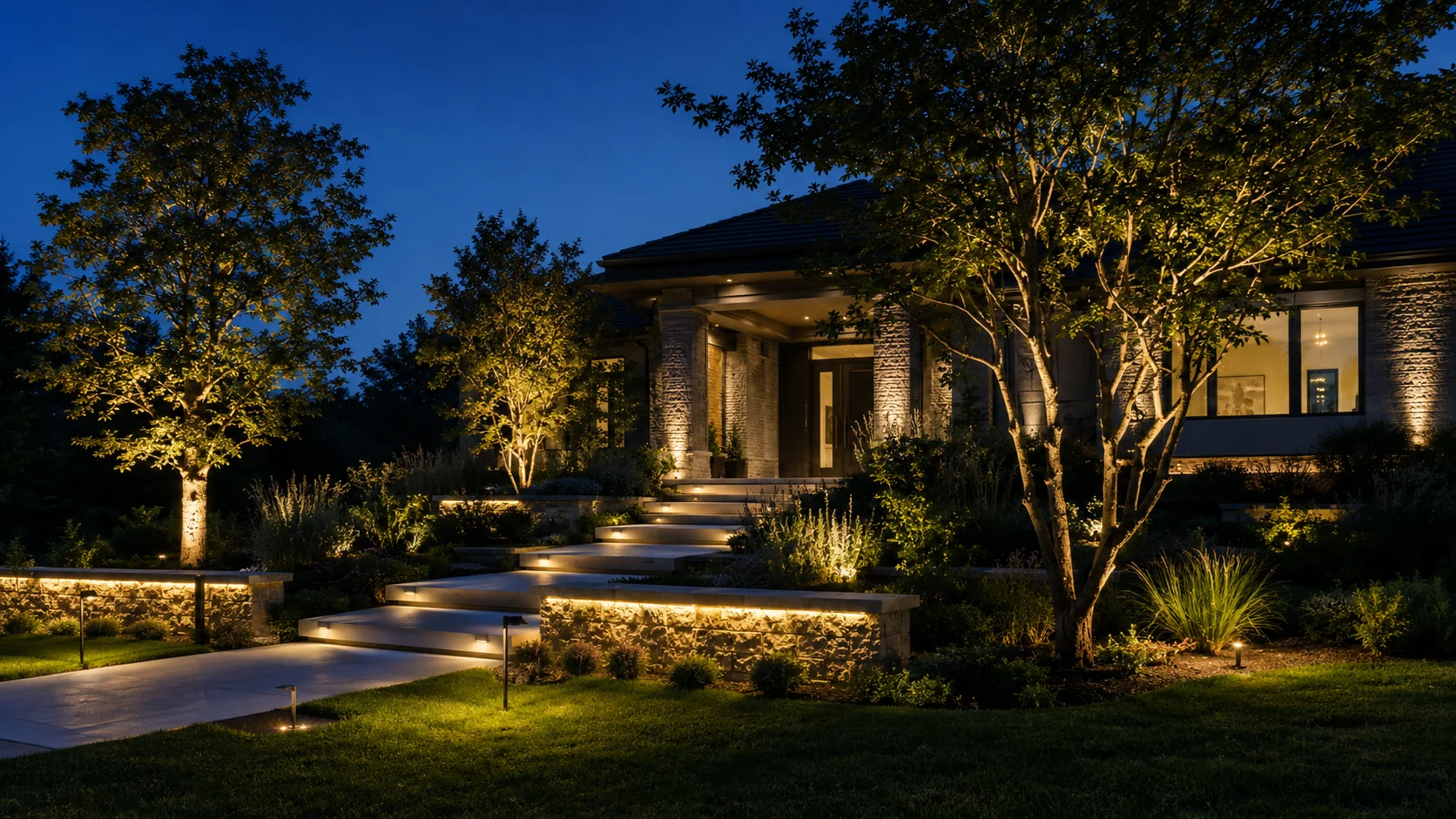
The front yard is often the most visible part of a landscape lighting project — seen from the street and by anyone approaching the house. A considered front-yard lighting layout makes your home look finished and welcoming after dark.

Driveway & Walkway Definition

Path lights along the driveway and front walk define the edge of paved surfaces, mark the approach to the front door, and give the front yard a clean, organized look after dark. We run low-voltage wire along the path route, connect fixtures with weatherproof connectors, and position each light to avoid glare into the eyes of approaching guests.

Tree & Shrub Uplighting

A well-placed uplight can make a single tree or specimen shrub the visual focal point of the entire front yard after dark. We position and aim the fixture, run the wire cleanly to keep it out of sight, and confirm the connection is weatherproof and protected from foot traffic and lawn equipment.

Entry & Address Lighting

Post lights, wall-mounted lanterns near the front door, and illuminated house numbers are typically line-voltage fixtures that require a dedicated circuit or a connection to existing exterior wiring. We run the circuit, mount the fixture, and install GFCI protection at the appropriate point in the circuit as required by code.

Backyard Applications

Extending Your
Outdoor Living Space

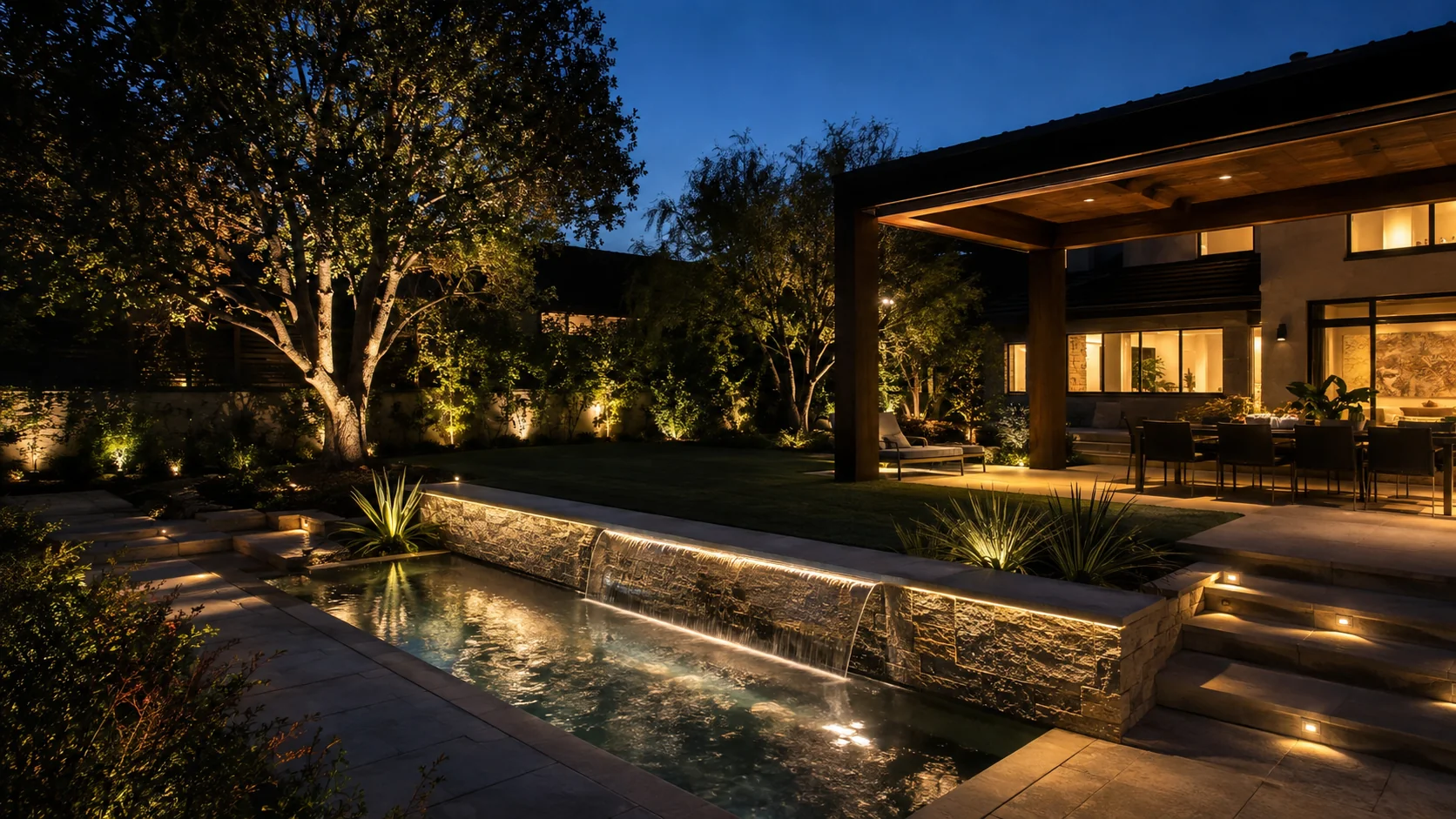
Backyard landscape lighting opens up how you use your outdoor space — making a patio, garden, or lawn usable after the sun goes down. We wire the complete backyard electrical system, from transformer placement to every fixture location, so the result is reliable and easy to use.

Patio & Deck Lighting

Deck post-cap lights, recessed deck fixtures, and in-wall step lights all require proper wiring and weatherproof connections. We run circuits cleanly through or under deck framing and mount fixtures securely so they hold up through Sacramento’s temperature swings and wet winters.

Garden & Planting Bed Uplights

Individual uplights or spotlights aimed at specimen plants, ornamental grasses, or garden borders create depth and visual interest in the backyard after dark. We position fixtures to work with your planting layout and route wire cleanly through the garden so it stays out of sight and out of the way of future planting.

Fence & Perimeter Lighting

Low-level fixtures mounted on fence posts or retaining walls define the perimeter of the outdoor space and reduce dark areas at the edges of the yard. We route wire along or through the structure and connect to the landscape lighting circuit, keeping the installation tidy and the connections protected from weather.

Examples

What Landscape Lighting
Can Look Like

Every yard is different. These images show general possibilities — we discuss your specific layout and goals during the free estimate.

Existing Systems

Repairs & Upgrades to
Existing Landscape Lighting

If your landscape lighting is failing, flickering, or partially out, we can diagnose the problem and repair or upgrade the system. Most issues trace back to a handful of common causes, and many can be resolved without replacing the entire installation.

Transformer Problems

Transformers fail over time — often presenting as lights that won’t turn on at all, a circuit that trips immediately, or inconsistent behavior across different zones. We test transformer output voltage and load capacity, inspect internal connections, and determine whether repair or replacement is the right call.

Wire Faults & Failed Splices

Low-voltage wire buried in the ground can be damaged by shovels, roots, or rodents over time. Splice connections corrode in older systems, particularly on systems that used cheap press-fit connectors instead of proper weatherproof splices. We locate the fault, re-splice cleanly, or run a new section of wire where needed.

Fixture & Lamp Failure

Individual fixtures stop working for several reasons: lamp burnout, water infiltration, corrosion at the socket, or physical damage from mowing or foot traffic. We test each fixture, replace lamps where applicable, and swap out fixtures that are beyond repair. If the fixture style has been discontinued, we can recommend compatible replacements that work on the existing wire run.

New or Existing System

Starting Fresh or
Adding to What You Have?

Whether you are starting a landscape lighting project from scratch or expanding a system already in place, the electrical approach differs in a few important ways. Understanding which situation applies helps us give you a more accurate estimate.

New Installation

A new system starts with transformer placement and sizing, circuit planning, wire routing, and fixture layout — all decided together before any trenching or installation begins. Starting fresh gives you the most flexibility in fixture placement and wire routing, and allows us to size the transformer correctly for the full planned scope rather than working around decisions made previously.

Adding to an Existing System

Adding fixtures to a working low-voltage system is often straightforward, but it requires checking the existing transformer’s remaining capacity. We calculate the current load versus transformer rating before adding any fixtures. If the transformer is at or near its limit, we replace it with a larger unit or add a second transformer on a separate circuit.

Inherited Systems

If you’re moving into a home with landscape lighting already in place, we can assess the transformer, wiring, and fixtures before you invest in expanding or repairing it. This gives you an honest picture of what you’re working with — including which parts of the system are worth keeping and which should be replaced.

Why It Matters

When Landscape Lighting
Needs a Licensed Electrician

Plug-in low-voltage systems are designed for homeowner installation, and simple projects are a reasonable DIY task. A licensed electrician is the right call any time the job involves a permit, a new circuit at the panel, a hardwired transformer, or diagnosing a system with unexplained failures.

Panel & Circuit Work

Adding a dedicated outdoor circuit, upgrading an existing exterior circuit, or hardwiring a transformer to the panel requires a licensed C-10 contractor in California. Unpermitted panel work can create problems at resale and may affect homeowner’s insurance claims. We pull the permit, do the work to code, and get it inspected.

Ground Fault Protection

All outdoor circuits must be GFCI-protected. We install and test GFCI protection at the appropriate point in each circuit and verify it trips correctly under test load before the job is finished. Outdoor circuits that trip GFCI repeatedly often have a wiring problem rather than a faulty breaker — we diagnose the cause rather than simply resetting.

Permits & Inspections

Not all landscape lighting work requires a permit — it depends on the electrical scope and your local jurisdiction. When permits or inspections are required, we handle the electrical permit application and coordinate the inspection so the work is on record and properly signed off.

How It Works

From Estimate
to Installation

Our process is straightforward: we assess the project, quote it honestly, do the work cleanly, and walk you through the finished installation before we leave.

1. Free Estimate

We visit the property, walk the planned fixture locations with you, assess the existing panel and exterior circuits, and review transformer options for your planned scope. We return a written estimate covering materials, labor, and any permit fees. No pressure — if the scope needs adjusting after you see the price, we discuss it before any work begins.

2. Scheduling

Once you approve the estimate, we schedule the installation and pull any required permits. For projects that need a new exterior circuit, we coordinate the permit and inspection timeline before the work date so there are no gaps on installation day.

3. Installation & Walkthrough

On installation day, we run wire, mount fixtures, connect and configure the transformer, and test every circuit and fixture before leaving. We walk you through how the system works — how to adjust the timer, how to add future fixtures within the transformer’s remaining capacity, and what to do if a fixture stops working — so you can use and maintain the system going forward.

Pricing & Estimates

What Landscape Lighting
Costs in Sacramento

Cost varies with the number of fixtures, wire run lengths, transformer size, whether new circuits are needed at the panel, and how accessible the installation areas are. We provide a written estimate before any work begins — no surprises on the invoice.

Factors That Affect Cost

The main cost drivers are: the number of fixtures and their type, total wire run length (which determines wire gauge and labor), whether a new outdoor circuit is needed at the panel, transformer capacity and control type, fixture mounting complexity (in-ground vs. stake vs. surface), and permit fees where a permit is required.

What We Don’t Charge For

The estimate visit is free. If we discover during the estimate that the scope is different from what was described — more wire run needed, a larger transformer required, or an existing circuit that needs work before we connect to it — we discuss the adjustment before any work begins, not after. The goal is a final invoice that matches the estimate.

Request a Free Estimate

Request a free project estimate online or by phone. We’ll schedule a site visit, assess transformer placement, walk the fixture layout with you, and return a written quote. We serve Sacramento, Citrus Heights, Roseville, Elk Grove, Rancho Cordova, Folsom, Granite Bay, and Rocklin.

Ready to Illuminate?

Signs It’s Time for
Landscape Lighting

Your yard is dark after sunset and you avoid using it in the evening
You’re landscaping or remodeling and want lighting planned in from the start
Your existing landscape lighting is failing, flickering, or partially out
You want driveway path lights, tree uplighting, or walkway definition
You’re building an outdoor entertaining area and need reliable exterior circuits
You want a timer or smart-home control that handles on/off automatically
Why Choose Us

Sacramento’s Landscape
Lighting Electrician

We focus on the electrical side of landscape lighting — the part that determines whether a system lasts five years or fifteen. Sized correctly, wired correctly, and installed with weatherproof connections, a landscape lighting system should perform reliably for years without ongoing failures.

Correct Transformer Sizing

The most common failure point in a landscape lighting system is a transformer that was undersized at installation. As fixtures age and wire connections develop resistance, voltage drop increases and fixture output falls. We size the transformer to your full planned load from the start — and include capacity for future additions.

Clean, Weatherproof Wire Work

Corroded splice connections and fixtures with water infiltration are the other primary failure point. We use weatherproof connectors and mount fixtures correctly for Sacramento’s climate — wet winters, dry summers, and significant temperature swings. Done right the first time means fewer service calls down the road.

Licensed & Veteran Owned

CA LIC #1154062. Joseph Perry brings military-standard accountability to every installation — work done to code, scoped honestly, and completed cleanly. Your yard is treated with the same care as his own. If we find something during the estimate that changes the scope, we tell you before we start, not after.

Common Questions

Landscape Lighting
FAQ

Does landscape lighting installation require a permit?

Permit requirements depend on the electrical scope and the local jurisdiction — not all landscape lighting work requires one. When a project requires permits or inspections, we handle the electrical permit application and coordinate the required inspections.

What is the difference between low-voltage and line-voltage landscape lighting?

Low-voltage (12V) systems use a transformer to step down standard household current, then distribute it through low-voltage wire to fixtures. They are the standard for most residential path lights, uplights, and spotlights. Line-voltage (120V) systems run full household current directly to fixtures — common for post lights, wall-mounted lanterns, and certain commercial-grade fixtures. Line-voltage outdoor circuits require a licensed electrician; permit requirements vary by jurisdiction and project scope.

Can you add fixtures to an existing landscape lighting system?

Usually, yes — if the existing transformer has remaining capacity. We calculate the current fixture load versus transformer rating and determine how much additional wattage can be added. If the transformer is at or near its limit, we replace it with a larger unit or install a second transformer on a separate circuit rather than overloading the existing one.

Can landscape lighting be integrated with a smart home system?

Yes. Many modern landscape lighting transformers have Wi-Fi connectivity and work with Amazon Alexa, Google Assistant, and Apple HomeKit. We install the transformer, wiring, and fixtures; you connect the system to your preferred platform through the manufacturer’s app. We can also discuss control compatibility with any specific system during the estimate.

How many landscape lighting fixtures do I need?

There is no fixed answer — it depends on the size of the yard, which features you want to highlight, and how bright you want the overall result. We walk the property with you during the estimate, discuss fixture placement and quantity, and size the transformer to your planned load. You can always add fixtures later within the transformer’s remaining capacity.

Can I install landscape lighting myself?

Plug-in low-voltage systems are designed for homeowner installation and are a reasonable DIY project for simple layouts. A licensed electrician is the right call for anything involving a new circuit at the panel, a hardwired transformer, line-voltage fixtures, or troubleshooting a failing or intermittent system. Incorrect wiring in outdoor environments can lead to repeated GFCI trips, fixture failures, or unsafe conditions.

How long does landscape lighting installation take?

Project duration depends on the number of fixtures, wire run lengths, and whether new panel work is needed. Simple low-voltage installations with a small number of fixtures can be completed in a few hours. Larger installations with complex wire routing or new circuits at the panel take longer. We give you a realistic timeline during the estimate so there are no surprises on installation day.

My landscape lighting is flickering or not turning on — what’s wrong?

The most common causes are transformer failure or overload, a failed wire connection at a splice point, voltage drop from undersized wire, or a failing individual fixture. We diagnose the system from the transformer forward, identify the fault, and repair or replace the failing component. Most landscape lighting problems can be resolved without replacing the entire system.
Ready to Illuminate
Your Yard?

Professional landscape lighting installation throughout Sacramento and the greater Sacramento area. Licensed, veteran-owned, done right.

Get In Touch

How Can We Help?

Something’s not working

Troubleshooting starts with a paid diagnostic visit. We find the cause, then quote the repair before any work begins.

Request Service

I’m planning a project

Installations and upgrades. Scope is known, so the estimate is free.

Get a Free Estimate

Not sure which one you need? Call (916) 903-0277 — we’ll figure it out in about two minutes.