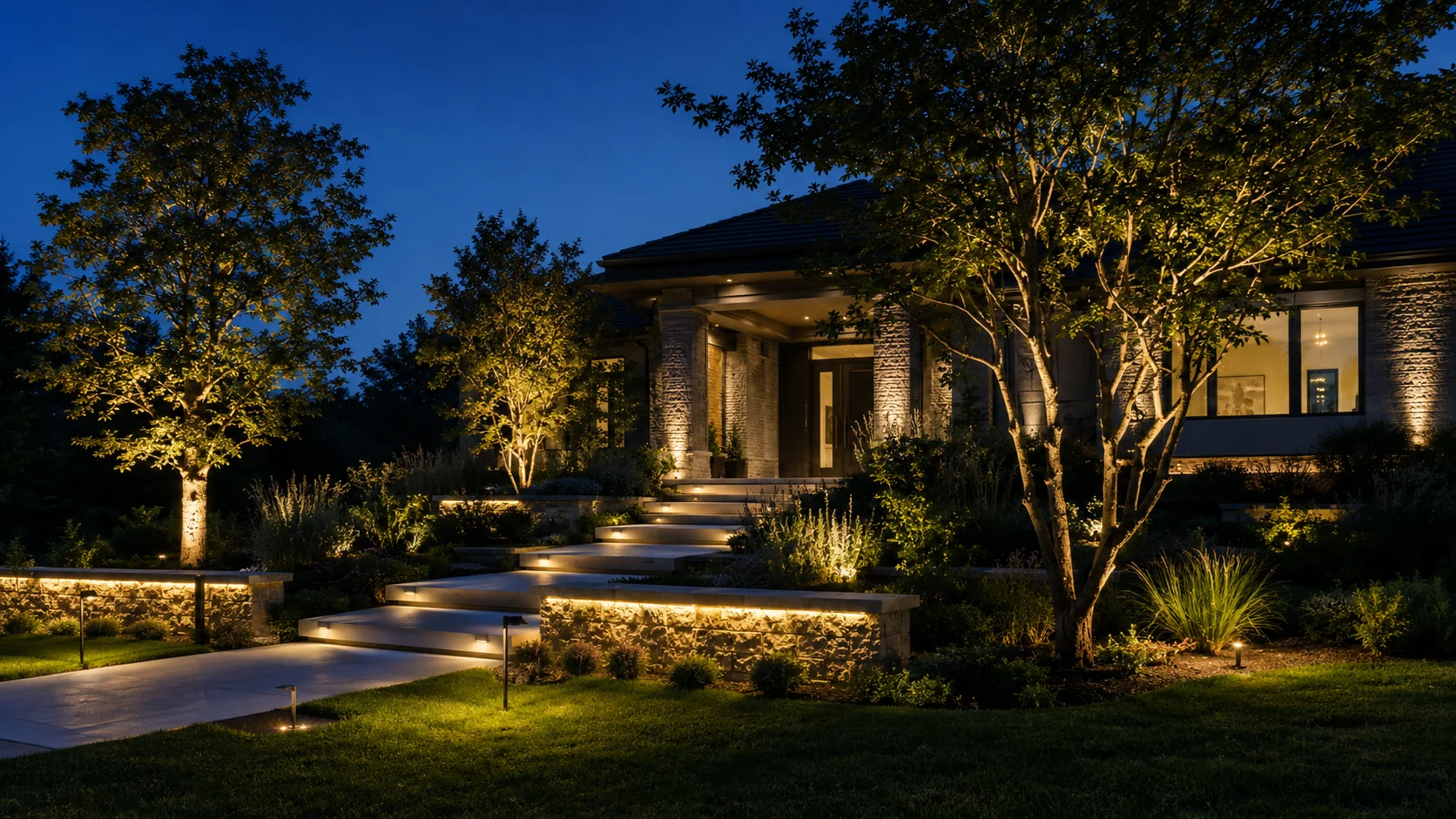
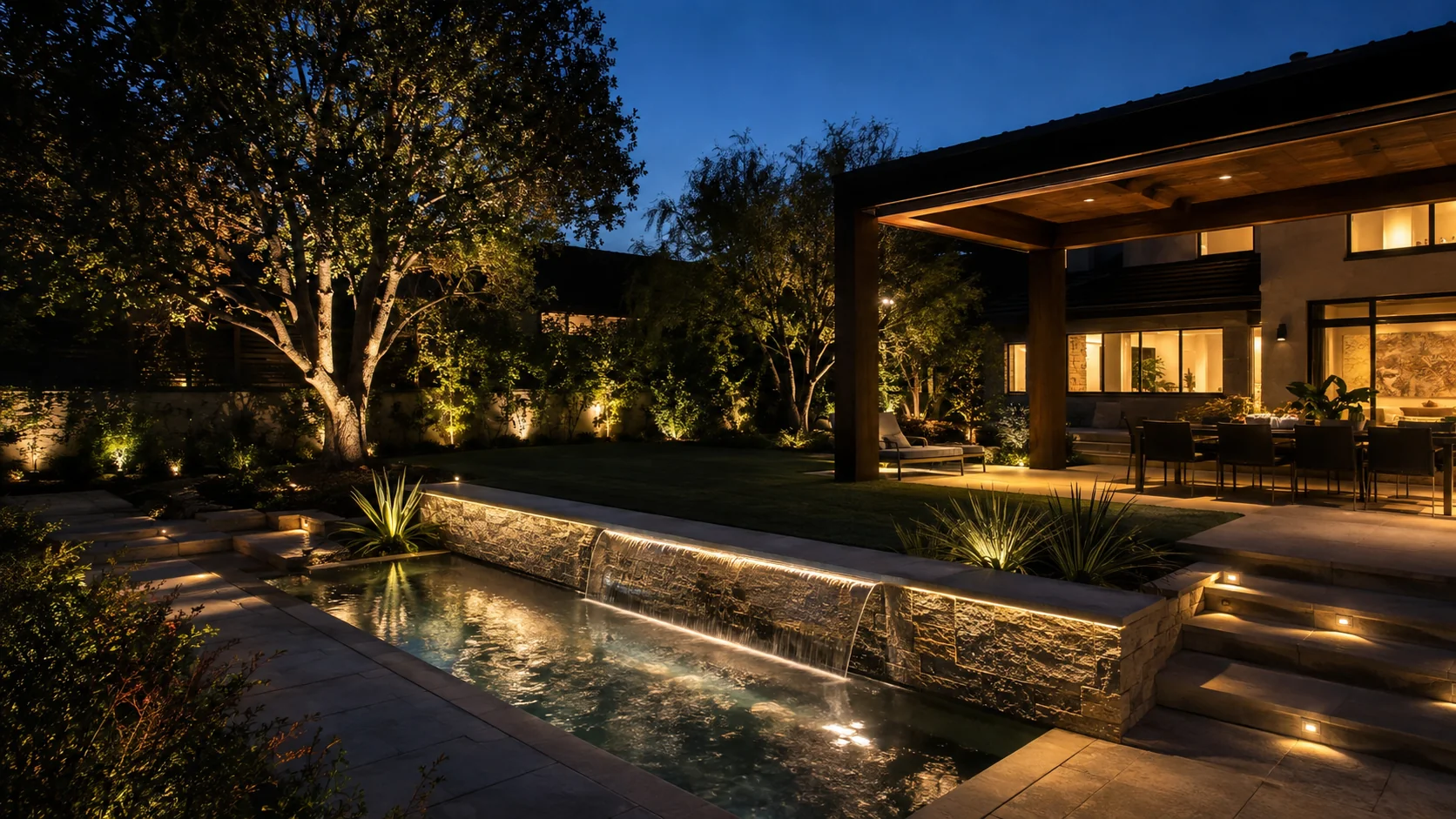
Does landscape lighting installation require a permit?
Permit requirements depend on the electrical scope and the local jurisdiction — not all landscape lighting work requires one. When a project requires permits or inspections, we handle the electrical permit application and coordinate the required inspections.
What is the difference between low-voltage and line-voltage landscape lighting?
Low-voltage (12V) systems use a transformer to step down standard household current, then distribute it through low-voltage wire to fixtures. They are the standard for most residential path lights, uplights, and spotlights. Line-voltage (120V) systems run full household current directly to fixtures — common for post lights, wall-mounted lanterns, and certain commercial-grade fixtures. Line-voltage outdoor circuits require a licensed electrician; permit requirements vary by jurisdiction and project scope.
Can you add fixtures to an existing landscape lighting system?
Usually, yes — if the existing transformer has remaining capacity. We calculate the current fixture load versus transformer rating and determine how much additional wattage can be added. If the transformer is at or near its limit, we replace it with a larger unit or install a second transformer on a separate circuit rather than overloading the existing one.
Can landscape lighting be integrated with a smart home system?
Yes. Many modern landscape lighting transformers have Wi-Fi connectivity and work with Amazon Alexa, Google Assistant, and Apple HomeKit. We install the transformer, wiring, and fixtures; you connect the system to your preferred platform through the manufacturer’s app. We can also discuss control compatibility with any specific system during the estimate.
How many landscape lighting fixtures do I need?
There is no fixed answer — it depends on the size of the yard, which features you want to highlight, and how bright you want the overall result. We walk the property with you during the estimate, discuss fixture placement and quantity, and size the transformer to your planned load. You can always add fixtures later within the transformer’s remaining capacity.
Can I install landscape lighting myself?
Plug-in low-voltage systems are designed for homeowner installation and are a reasonable DIY project for simple layouts. A licensed electrician is the right call for anything involving a new circuit at the panel, a hardwired transformer, line-voltage fixtures, or troubleshooting a failing or intermittent system. Incorrect wiring in outdoor environments can lead to repeated GFCI trips, fixture failures, or unsafe conditions.
How long does landscape lighting installation take?
Project duration depends on the number of fixtures, wire run lengths, and whether new panel work is needed. Simple low-voltage installations with a small number of fixtures can be completed in a few hours. Larger installations with complex wire routing or new circuits at the panel take longer. We give you a realistic timeline during the estimate so there are no surprises on installation day.
My landscape lighting is flickering or not turning on — what’s wrong?
The most common causes are transformer failure or overload, a failed wire connection at a splice point, voltage drop from undersized wire, or a failing individual fixture. We diagnose the system from the transformer forward, identify the fault, and repair or replace the failing component. Most landscape lighting problems can be resolved without replacing the entire system.